

Lower back pain for Melbourne desk workers: what’s driving it and what to do
Lower back pain is the most common musculoskeletal complaint at the Bourke Street clinic. It peaks every winter, when desk hours stretch, movement drops off, and cold commutes add their own load on top.
Most people sit on it until it becomes bad enough to interfere with sleep or sport. By then, what started as tightness at the end of a long week has usually settled into a pattern that takes longer to shift than a single session will fix.
For someone sitting eight or nine hours a day near Flinders Lane or Collins Street, the mechanics are predictable. That makes it manageable, if you understand what’s actually happening.
Why sitting builds lower back pain
The lumbar spine is built to move. When it doesn’t, the structures around it compensate.
Eight hours at a desk compresses the lumbar discs, shortens the hip flexors, and progressively switches off the muscles that should be stabilising the pelvis. Hip flexors are where most desk-related back pain starts. When the iliopsoas and rectus femoris shorten from sustained sitting, they tilt the pelvis forward, increasing the lumbar curve. The lower back muscles then work harder to hold that position, hour after hour.
The posterior chain, the glutes and hamstrings, switches off in a seated position. These muscles should be sharing the load with the lumbar spine, but they’re doing next to nothing when you’re sitting. When you stand up after three hours at a desk and try to walk normally, the lower back carries work the glutes should be doing.
Add a Melbourne winter commute. Cold shortens the muscles surrounding the lumbar spine further. Most people either stand on a packed tram holding the rail with one arm, or walk hunched into the wind from Parliament Station to their office. Both load the lower back in ways that compound what’s accumulated at the desk.
None of this is dramatic. It’s slow and mechanical, and it stacks up across the working week.

Osteopathy appointment for back pain
How Osteopathy treats lower back pain
The assessment at the Bourke Street or Essendon clinic doesn’t start at the painful spot. It starts with how the whole body is moving.
Lumbar joint mobility is assessed first. Restrictions at L4/L5 and L5/S1, the two lowest segments of the spine, are the most common source of deep, localised back pain in desk workers. These joints respond well to mobilisation, and most patients notice meaningful improvement in stiffness within the first two or three sessions.
The sacroiliac joint gets assessed as well. SI joint dysfunction is frequently mistaken for lumbar disc pain because the referral patterns overlap. Distinguishing between the two changes the treatment approach, so it’s worth checking before assuming.
Hip flexor length matters as much as the spine itself. Without addressing the shortened hip flexors, the lower back returns to the same overloaded position within days of treatment. MOSIC’s practitioners work through the full hip-lumbar chain rather than treating only the painful segment.
For patients with disc-related pain, sharp pain, leg referral, or pins and needles, the assessment includes neurological screening and imaging advice where needed. Most disc presentations respond well to conservative osteopathic management. The ones that don’t are referred on with a clear explanation of why.
If this sounds familiar, book online at melbourneosteopathycentre.com.au or call 03 9663 6202.
What helps between appointments
Movement is the main thing. Not a gym session, just movement throughout the day.
Cat-cow at the desk takes two minutes. On all fours, alternate between arching and rounding the lower back, ten repetitions, twice through the day. It circulates fluid through the lumbar discs and resets the resting tension in the lumbar extensors. Can be done at home in the morning or on the office floor.
Hip flexor stretching makes more difference than most people expect. A kneeling lunge with the back knee on the floor, held for ninety seconds each side, produces genuine change in hip flexor length over two to three weeks of consistency. Morning and after sitting for more than two hours are the best times.
Standing up and walking is more effective than a standing desk. A standing desk keeps you upright but doesn’t create movement. Getting up every forty-five minutes, even just to fill a glass of water, fires the glutes and resets the lumbar load. That’s the mechanism, not the standing.
Sleeping position matters through winter. People curl tighter in the cold, holding the lumbar spine in flexion for hours overnight. A pillow between the knees when sleeping on your side reduces the rotational strain on the sacroiliac joint through the night.
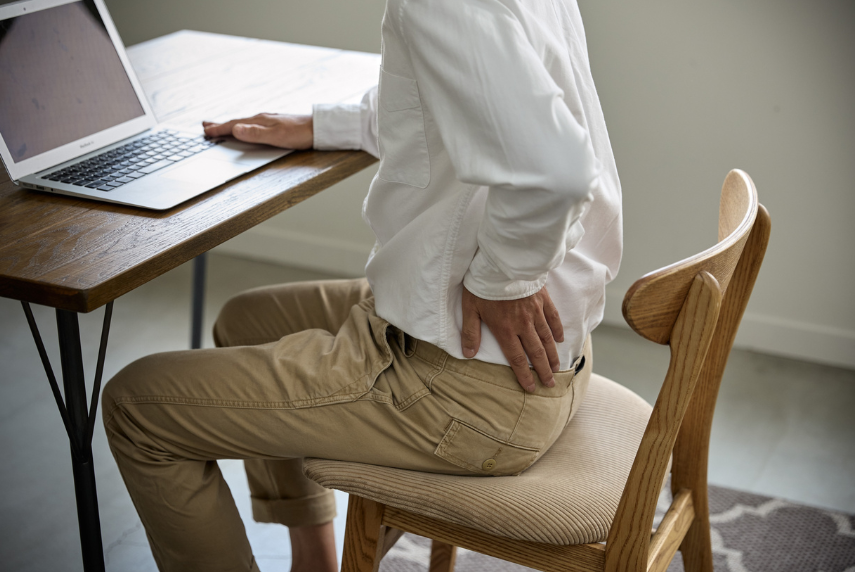
Long hours at the desk resulting in back pain
The melbourne winter pattern
Melbourne winters are mild compared to most, but they reduce incidental movement in ways that accumulate. Fewer lunch walks. Shorter commutes broken up by sitting on the tram instead of walking. Longer stretches under the heating without getting up.
The Bourke Street clinic sits between Parliament and Flinders Street. People coming in through July and August tend to share a profile: occasional back tightness that had been manageable for months until winter tipped it into something interrupting sleep or making it hard to sit through a meeting.
The Essendon clinic on Keilor Road sees the same from the northwest corridor. Different suburb, same desk, same pattern building through the week.
For anyone who’s found lower back pain becoming a reliable feature of winter over the last few years, that pattern is worth addressing properly rather than waiting for September.
FREQUENTLY ASKED QUESTIONS
Q: Can I see an osteopath for lower back pain without a GP referral? No referral needed. Book directly online at melbourneosteopathycentre.com.au or call 03 9663 6202. If your pain includes leg referral, numbness, or pins and needles, mention it when booking so the practitioner can allocate enough time for a neurological screen at the first appointment. Telehealth is also available if getting to the clinic is difficult.
Q: What’s the difference between an osteopath and a physio for lower back pain?There’s real overlap, and both can get good results. Osteopaths typically assess the full movement chain, including hip mobility, pelvic alignment, and thoracic stiffness as contributors to lumbar pain, rather than treating the sore segment in isolation. For desk-related pain with a postural driver, that broader assessment tends to identify the source faster.
Q:How many sessions does lower back pain usually take? Recent-onset pain from a clear mechanism, a long flight or an intense work week, often responds in two or three sessions. Patterns that have been running for months take longer, usually four to six sessions combined with daily movement changes. Your practitioner will give you a realistic timeline after the first assessment.
Q: Can desk-related back pain cause leg pain? Yes. The sciatic nerve runs close to the lumbar discs and through the piriformis muscle in the hip. When disc pressure or muscle tension compresses the nerve, the pain refers into the buttock, back of the thigh, calf, or foot. Not all leg pain from the lower back is true sciatica. Referred pain from lumbar joints and sacroiliac dysfunction follows similar pathways, and a proper assessment distinguishes between them.
Q: Is osteopathic treatment for lower back pain covered by private health insurance? Most extras covers include a rebate for osteopathy. Lower back pain is covered the same as any musculoskeletal complaint, and the amount depends on your fund and cover level. WorkCover and TAC claims are accepted for work-related or vehicle injury back pain. MOSIC’s reception can confirm what applies when you book.
Contact our friendly Osteo team at MOSIC. We can help you prevent or recover from your injuries.
