

Melbourne Marathon 2026: the training injuries showing up now and how to handle them
The Melbourne Marathon is on 11 October. For anyone running the full, half, or 10K, training is well underway. So is the injury list.
June and July are when the Bourke Street clinic sees training-related presentations build. IT band pain on the outside of the knee. Shin soreness that started as a niggle and won’t clear. Heel pain that’s worst first thing in the morning. These injuries don’t come from bad luck. They come from how training load is managed, and they respond well when dealt with early.
Getting seen in June beats calling the clinic in September hoping for a miracle before race day.
The most common training injuries
IT band syndrome is the most common knee complaint in runners building mileage. The iliotibial band is a thick strip of connective tissue running from the hip to the outer knee. When it’s overloaded, it causes a sharp, burning pain on the outside of the knee that typically hits at a consistent point in a run, often around the 20 to 30-minute mark, and forces the runner to stop.
The real source is usually not the band itself but the hip. Weak hip abductors, particularly the gluteus medius, cause the femur to internally rotate with each stride, increasing the load on the IT band. Foam rolling the band gives temporary relief. Addressing the hip weakness addresses the cause.
Shin splints, technically medial tibial stress syndrome, is the most common running injury in people building volume. It presents as pain along the inner shin that’s worse at the start of a run and often improves after warming up, until the load gets high enough that it stops improving at all. Increasing mileage too fast, running on concrete, and insufficient calf strength are the usual drivers.
Plantar fasciitis produces heel pain that is distinctively bad first thing in the morning and after sitting for long periods. It comes from overloading the plantar fascia along the base of the foot. Tight calves and Achilles tendons are almost always contributing, as is any increase in volume the foot wasn’t prepared for.
Achilles tendinopathy is less acute but harder to shift. It builds from repetitive loading on a tendon that isn’t adapting fast enough. Typically presents as stiffness in the Achilles first thing in the morning that eases through the day, but worsens again with load increases. It is a training load problem, not an acute injury, and it needs to be treated as one.

Man training for a marathon
How Osteopathy helps
The value of an osteopathic assessment for running injuries is that it looks at the whole movement chain, not just the spot where the pain is.
IT band pain at the knee almost always traces to hip abductor weakness and altered pelvic control. Treating the knee in isolation doesn’t change the mechanics that produced the injury. MOSIC’s practitioners assess hip strength and stability as part of every lower limb running presentation, because the cause and the pain are rarely in the same place.
Shin splints are assessed for tibial stress, calf tightness, and training load. Footwear and running surface come into the conversation as well. If the weekly mileage increase is unsustainable for where the patient is in their training, that needs to be part of the management plan.
For plantar fasciitis, the Achilles and calf chain is assessed as standard. Intrinsic foot muscle strength matters too, and is often completely undertrained. Most people running 50 kilometres a week haven’t done a single calf raise in months.
What you can do right now
The 10% rule is a starting point, not a ceiling. Increase weekly mileage by no more than 10% per week. Most runners ignore this when motivation is high. It’s the most common reason training injuries show up in July.
Strength work alongside running makes a bigger difference than most recreational runners expect. Single-leg glute bridges, lateral band walks, and step-downs build the hip abductor strength that prevents IT band problems. Single-leg calf raises build the Achilles and plantar resilience that prevents heel and shin injuries. Two sessions a week, twenty minutes each, changes the injury profile significantly over a training block.
Running surface matters. The Tan Track and Yarra Trail give softer footing than CBD streets. Collins Street and Bourke Street are concrete, which increases tibial load with every step. Mixing surfaces reduces the cumulative stress on any single structure.
Warm-down protocol matters more as volume increases. Five minutes of walking after a run, followed by calf stretching held for ninety seconds each side, reduces the resting tension in the Achilles-plantar chain. The consistency of doing this after every run is what makes the difference, not occasional stretching.
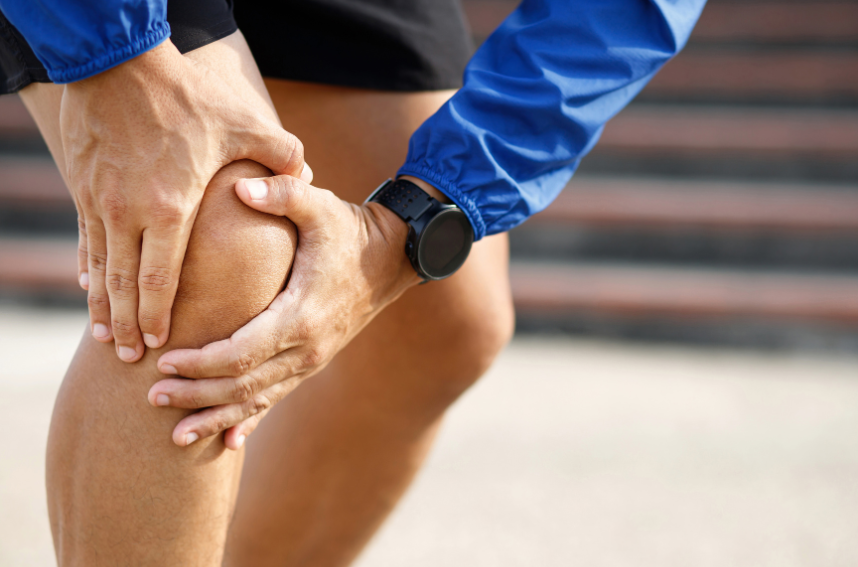
Holding knee to relieve pain from their knee injury
Getting the timing right for Melbourne
The Tan Track is the main training ground for CBD-based runners preparing for the Melbourne Marathon. The river loop is 3.8 kilometres, well-lit, and predictable. It’s also hard asphalt for most of the loop, which matters when you’re doing multiple laps per session.
The Yarra Trail gives a softer surface option for long runs, connecting the CBD south through Princes Bridge and along the river. For anyone building to a half or full marathon through July and August, mixing Tan loops with river trail runs reduces the cumulative concrete load.
Winter mornings in Melbourne add a variable. Cold muscles are less pliable and more susceptible to injury in the first kilometre of a run. A proper warm-up before heading out, five minutes of dynamic mobility including leg swings, hip circles, and calf raises, changes the risk materially. Not just starting at easy pace and calling that a warm-up.
October is close enough that any persistent injury presenting now needs to be addressed, not managed with compression socks and optimism.
Get assessed now, not in September
FREQUENTLY ASKED QUESTIONS
Q: Can I see an osteopath for a running injury without a referral? No referral is needed. Book directly online at melbourneosteopathycentre.com.au or call 03 9663 6202. If you have a specific race date in mind, mention it when booking so your practitioner can factor the timeline into the management plan. Telehealth is available for initial consultations if getting to the clinic around training is difficult.
Q: What’s the difference between an osteopath and a physio for running injuries? Both can treat running injuries well. Osteopaths typically assess the full movement chain, looking at how hip control, pelvic alignment, and foot mechanics are contributing to the injury, rather than treating only the painful area. For biomechanical running injuries where the cause and the pain are in different places, that broader assessment tends to identify the source faster.
Q: Will I need to stop running during treatment? Not necessarily. For most running injuries, a reduction in load and some surface changes are enough to allow treatment to progress without stopping completely. Full rest is rarely the first recommendation, particularly for someone training to a race date. Your practitioner will give you a clear picture after the initial assessment.
Q: How long does IT band syndrome take to clear? It depends on how long it has been building and whether the hip weakness driving it is being addressed. Presentations caught early, within the first few weeks of symptoms, often respond in three to four sessions combined with hip strengthening. Longer-running cases take more time. The band itself is not the issue; the hip mechanics are, and those take a few weeks of consistent work to change.
Q: Is osteopathic treatment for running injuries covered by private health insurance? Most extras cover with osteopathy inclusions will cover running injury treatment. The amount depends on your fund and cover level. If the injury was sustained during sport, some policies have specific sports injury provisions. MOSIC’s reception can clarify what applies when you book.
Contact our friendly Osteo team at MOSIC. We can help you prevent or recover from your injuries.
