

You know the feeling. The first properly mild morning after months of dark, wet runs you kept skipping. The Tan looks inviting again, the mornings are lighter, and there’s a niggling sense that October events are closer than they feel. So you dig out the shoes and go.
The run feels great. Legs a bit heavy, lungs working, but good. It’s the week after that catches people out.
This is the most predictable injury season we see. Not the deep of winter, when nobody’s moving, but the turn into spring, when everyone starts again at once and their enthusiasm runs well ahead of their tendons. If you’re a desk worker in the CBD or out past Essendon who’s about to start running again, a few minutes of reading now can save you six weeks on the sidelines later.
Why the first few weeks back are where you get hurt
Fitness comes back fast. That’s the trap. Within two or three weeks your breathing settles, your pace picks up, and you feel like your old self. But the tissues that actually absorb the pounding, your tendons, your calf muscles, the connective tissue around the shin, adapt much slower than your heart and lungs do.
So you get a body that feels ready and a set of structures that aren’t. You run at a pace your fitness can hold but your legs haven’t earned yet, and the load lands somewhere it shouldn’t.
The injuries are boringly consistent. Achilles and calf trouble leads the list, especially for men over 35 who’ve had a winter of sitting. Months at a desk leave the calf short and quiet, then you ask it to load a few thousand times in one run. Shin pain, the ache along the inside of the shin that people call shin splints, turns up when mileage climbs too quickly on hard surfaces. Runner’s knee, that dull pain around or under the kneecap, shows up when the glutes have switched off from all the sitting and the knee ends up managing load it was never meant to carry alone. Plantar heel pain rounds it out, usually in someone who went from nothing to four runs a week.
None of these are bad-luck injuries. They’re load injuries. Too much, too soon, on legs that spent winter under a desk.

What osteopathy actually does for a running injury
The useful question isn’t where it hurts. It’s why that spot got overloaded in the first place.
A sore Achilles in a 40-year-old office worker is rarely just an Achilles problem. More often it’s a stiff ankle that won’t bend far enough, a calf that lost its strength over winter, or a hip that isn’t extending properly, so the lower leg picks up the slack. Treat only the sore tendon and you’re back in a month.
At a first appointment our practitioners take a proper history, your training, your working week, how long you sit, what you’re building towards, then watch how you actually move. We look at ankle and hip range, how you load each leg, how your foot behaves when it hits the ground, and where your movement is being blocked further up the chain.
The hands-on side is soft tissue work, joint articulation, and stretching where it helps. But the part that holds is the loading plan you take away. For a calf or Achilles problem, graded strength work is what rebuilds the tissue’s tolerance. Passive treatment feels good on the day and doesn’t fix the reason it happened.
How to come back without breaking
Most of this is unglamorous, and it’s what keeps runners on the road.
Walk before you run, then run less than you want to. Your first few sessions should feel almost too easy. A common way back is run-walk: a few minutes running, a minute walking, repeated. It feels soft. It’s also how you get to week six still running instead of icing your shin.
Add slowly. The old ten per cent rule is a decent guide, don’t grow your weekly distance by much more than that. The bigger error is jumping from zero to four runs a week because the weather turned. Add one run at a time and hold it for a week before you add another.
Strengthen your calves and glutes. Calf raises, straight-leg and bent-leg, a few sets a couple of times a week, are the single best insurance for the lower leg. Bridges and single-leg work wake the glutes up after a winter of sitting so your knees stop copping it.
Watch the surface. Coming straight off concrete footpaths is harder on shins than grass or a softer path. Mix it up early. If you’re running the same hard loop every time, your legs never get a break.
Check your shoes. If last season’s runners have done a few hundred kilometres, the cushioning is gone even if the uppers look fine. Old shoes are a quiet cause of early-season shin and knee pain.
And the important one. If something sharpens up mid-run, or an ache is still there the next morning, back off. Running through early-stage shin or Achilles pain is exactly how a niggle becomes a season.
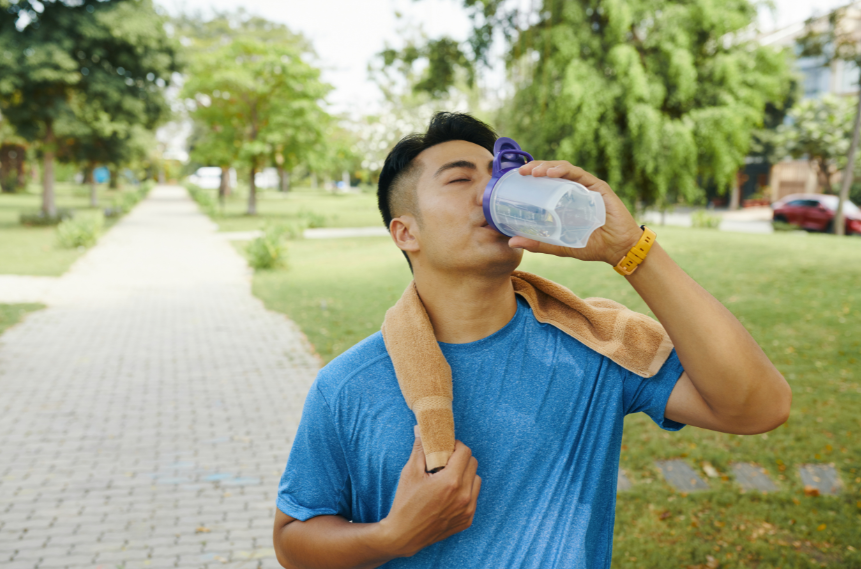
Melbourne in spring: everyone starts at once
Timing is the thing here. The Melbourne Marathon Festival and the shorter spring events sit in October, so August and September are when half the city quietly decides to get race-ready. The paths fill up, the group runs start again, and the pressure to ramp mileage is suddenly everywhere.
That pressure is where people go wrong. There’s nothing wrong with training for an October event, but a body that’s been sitting through a Melbourne winter needs a genuine base first. If you’re eyeing a distance, count backwards and give yourself more lead-in than feels necessary.
The weather plays its part too. Early spring mornings around the Tan, Princes Park or Albert Park Lake are still cold, and cold muscle is stiffer and less forgiving. If you’re heading out before work from a CBD apartment, spend the first ten minutes easy rather than launching into pace. Keep a layer on until you’ve actually warmed through. The old advice to run the first kilometre like you’re being timed is how a lot of calves let go in August.
FREQUENTLY ASKED QUESTIONS
Q: Can I see an osteopath in Melbourne CBD without a referral?Yes. Osteopaths are primary healthcare practitioners in Australia, so you can book directly without going through a GP first. Our Bourke Street clinic is on Level 9 at number 140, a short walk from most of the CBD, and we also see patients in Essendon. You’d only need a referral if you were going through a particular scheme such as a Chronic Disease Management plan or a WorkCover claim, and we can walk you through that at your first visit.
Q: What’s the difference between an osteopath and a physio for a running injury? Both treat running injuries well and there’s plenty of overlap. Osteopaths tend to look more broadly at how the whole body is moving, so we’ll spend time on your hips, ankles and lower back rather than only the sore spot, on the basis that something further up the chain usually caused it. Osteopathic treatment involves more hands-on work. In practice the best choice is often the practitioner you’ll actually keep seeing through your rehab.
Q: How many sessions will I need for a calf or Achilles problem? It depends on how long it’s been there. Something caught early often settles over three or four sessions across a month, alongside the strength work you do at home. A grumbling Achilles that’s been building all season takes longer, because tendons are slow to rebuild. We’ll give you a realistic estimate after the first assessment rather than an open-ended plan, and you should notice progress within the first couple of visits.
Q: How much running is too much when I’m just starting again? Less than you think. For most people coming off a winter break, two or three easy run-walk sessions a week is plenty for the first fortnight. The mistake isn’t the individual run, it’s stacking four hard runs into week one because you feel fit. Fitness comes back faster than your tendons, so let the legs catch up before you add volume.
Contact our friendly Osteo team at MOSIC. We can help you prevent or recover from your injuries.
