

Daylight saving kicked in at the start of October, and suddenly there’s enough light to squeeze in nine holes after work. Plenty of Melbourne office workers are doing exactly that, heading out from the CBD to a twilight round or a quick bucket at the range on the way home.
Then Saturday morning arrives and bending down to put your shoes on feels like a negotiation.
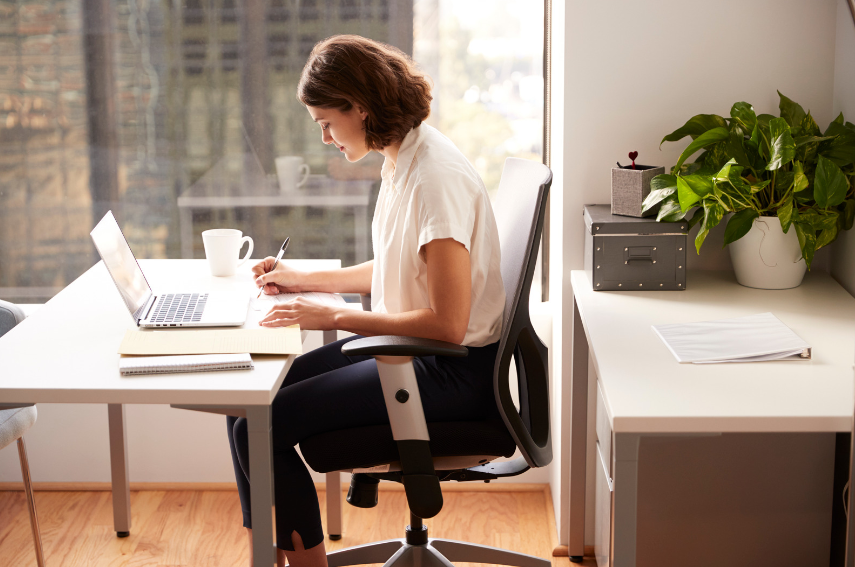
Lower back pain is one of the most common complaints among recreational golfers, and in our experience it shows up most in spring, when people go from barely swinging over winter to playing two or three times a week. The odd thing is that the swing usually isn’t the main problem. For a lot of city professionals, the trouble starts at the desk, eight or nine hours a day, long before they reach the first tee.
That’s useful to know, because it means a fair bit of the fix happens during the working week too. You can start on it at your desk tomorrow.
WHY GOLF AND DESK WORK GANG UP ON YOUR LOWER BACK
A golf swing is a fast rotation. The power comes from your hips turning, your upper back (the thoracic spine) twisting, and your lower back staying fairly stable in between. The lumbar spine, the five vertebrae in your lower back, is built to bend forward and back. It isn’t designed to do much twisting.
Now add a desk job. Sitting for long stretches tends to leave the hip flexors at the front of the hip short and tight, and the glutes switched off. Your upper back gets used to curling forward over a keyboard and starts to lose its ability to rotate. A long tram ride, or the drive in from Essendon, doesn’t help.
So when you swing, the rotation has to come from somewhere. If your hips won’t turn and your upper back won’t twist, the lower back makes up the difference. That means hundreds of loaded twists a round through the part of the spine least suited to them, plus all the bending to tee up, line up putts and pick the ball out of the cup.
Common patterns we see:
- A dull ache on one side of the lower back, usually the trail side (the right side for a right-handed golfer)
- Stiffness the morning after a round that eases once you get moving
- A sharp catch at the top of the backswing or just after impact
- Pain that flares on the drive home, after the car seat has had time to stiffen everything up
Most of these are irritated joints and overloaded muscles rather than anything structural. They’re worth sorting out early, though, because they rarely go away while the hips and upper back stay stiff.
pain, an Achilles that’s now sore first thing every morning, or a hip that’s been grumbling since the long runs in September.
HOW OSTEOPATHY HELPS GOLFERS WITH BACK PAIN
When you see one of our osteopaths at the Bourke Street clinic, the first appointment is mostly about finding out where the problem is coming from. That means a proper history (your work set-up, how often you play, when the pain shows up) and then a look at how you move.
Your practitioner will usually check:
- How far each hip rotates, left and right, because a big difference between sides is common in golfers
- How well your upper back twists, sitting and standing
- Whether the lumbar joints and the muscles around them are irritated
- Glute and core control, often with a simple single-leg test
- Your set-up posture, if you’re happy to mime a few swings
Osteopathy treatment is hands-on and tailored to what turns up. It might include soft tissue work on tight hip flexors and the muscles beside the spine, joint mobilisation to get the upper back and hips moving, and gentle techniques to settle an irritated lower back. You’ll also leave with a short list of exercises, because a session on the table only helps for so long if Monday to Friday keeps undoing it.
Where it’s useful, our team can also look at your desk set-up. This is a big part of osteopathy for desk workers: for a lot of people, two or three changes at work do more for their golf than any swing tip.
We won’t promise you’ll add 20 metres to your drive. What we aim for is a back that copes with a weekly round without you paying for it the next day.
WHAT YOU CAN DO THIS WEEK
You don’t need a gym or an hour a day. A few small habits go a long way.
Get up every 30 to 45 minutes at work. Stand, walk to the kitchen, take a call on your feet. Breaking up long sitting is the single easiest thing you can do for your hips.
Stretch your hip flexors daily. Kneel on one knee with the other foot in front, tuck your tailbone under and shift your weight forward until you feel a stretch at the front of the back hip. Hold 30 seconds each side, twice. This is a good one to do after a long meeting.
Open up your upper back. Lie on your side with knees bent and arms out in front, then rotate your top arm and chest open towards the floor behind you. Ten slow reps each side. It’s simple, and it gives your swing somewhere to turn from other than your lower back.
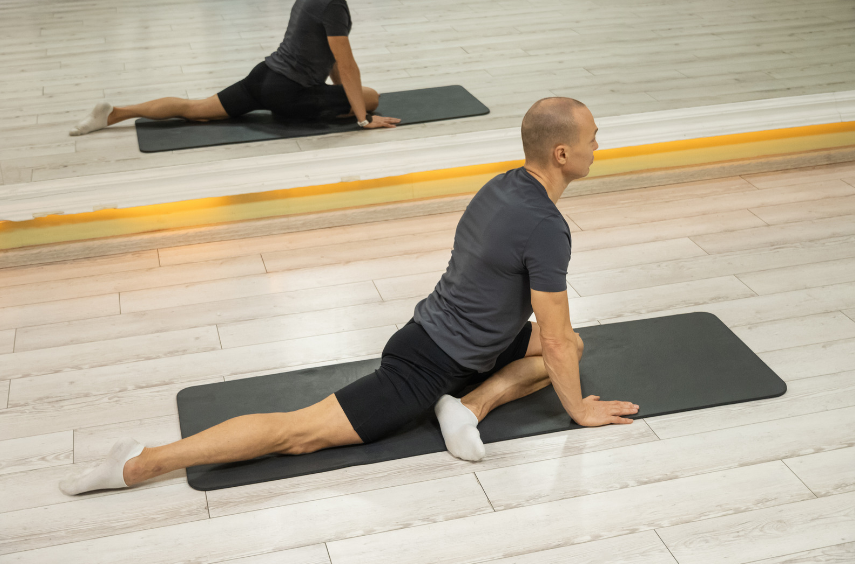
Try a pigeon stretch for hip rotation. From hands and knees, bring one knee forward behind your wrist and slide the other leg back. Ease down until you feel the stretch in the buttock. If your knee complains, do it lying on your back with one ankle crossed over the opposite knee instead.
Warm up before you hit. Ten minutes of walking, hip circles and gentle half swings before you reach for the driver. Most twilight golfers go straight from the car to full swings, and the back notices.
Ease back in. If you played twice all winter, don’t jump to three rounds a week. Build up over a few weeks.
If pain runs down your leg, comes with numbness or pins and needles, or isn’t settling after a week or two, get it checked rather than playing through it.
SPRING GOLF, SUMMER COMPS AND CITY WORKLOADS
Early November in Melbourne is a funny time for the body. Club competitions are back in full swing, corporate golf days start filling the calendar, and the end-of-year crunch at work means longer hours at the desk. Your back gets more golf and more sitting at the same time.
Spring is a busy stretch for back pain in Melbourne golfers. We see it every year with patients from around Collins Street and Flinders Lane. They feel fine through winter, play a couple of long rounds in October, and by November they’re nursing a lower back that won’t settle before the Christmas break. A sore back also tends to change your swing, and the compensation can move the problem to your hip, shoulder or elbow.
If you’ve got a corporate golf day coming up, or you’re planning on playing more over summer, now is a good time to deal with the niggles. A few weeks of work on hip and upper back mobility can make a real difference by December.
FREQUENTLY ASKED QUESTIONS
Q: Can I see an osteopath in Melbourne CBD for golf back pain without a referral? Yes. Osteopaths in Australia are primary healthcare practitioners, so you don’t need a GP referral to book. Our Bourke Street clinic is a short walk from Bourke Street Mall and several tram routes, which makes a lunchtime or after-work appointment easy to fit in. If your GP has set you up with a chronic condition management plan, bring the details along, as it may cover part of the cost. Otherwise you can book online or call 03 9663 6202.
Q: What’s the difference between an osteopath and a physio for golf-related back pain?There’s a lot of overlap, and both are registered with AHPRA. Osteopaths tend to spend more of the session on hands-on treatment and look at how the whole body moves together, which suits golf back pain because the cause is often in the hips or upper back rather than the sore spot itself. Physios often lean more towards exercise-based rehab. Either can help. What matters most is a proper assessment and a plan you’ll stick to.
Q: How many osteopathy sessions will I need for back pain from golf? It depends on how long the pain has been around and how stiff you are. A recent flare-up often settles noticeably within two to four sessions, usually spaced a week or so apart. A back that has been grumbling for months, or keeps coming back each spring, may need a few more sessions alongside regular home exercises. Your osteopath should give you a rough plan at the first appointment and adjust it based on how you respond, rather than locking you into a long course.
Q: Can golf back pain cause pain in my hip or down my leg? It can. Irritated joints and muscles in the lower back often refer pain into the buttock or the side of the hip, and some golfers notice a deep ache there after a round. Pain that travels below the knee, or comes with numbness, tingling or weakness in the leg, can mean a nerve is irritated. That needs a proper assessment. Don’t keep playing through it and hope it settles, because a nerve that’s being pinched usually gets worse with repeated twisting.
Contact our friendly Osteo team at MOSIC. We can help you prevent or recover from your injuries.
