

The AFL Grand Final is this Saturday. The jacarandas are starting to open along Bourke Street. And somewhere between the two, a lot of Melbourne blokes pull their running shoes out from under the bed for the first time since June.
Our team sees this pattern every year. The first warm September weeks arrive, motivation spikes, and then, about a fortnight later, so do the injury presentations. Achilles tendinopathy. Shin pain that appeared from nowhere. Knees that were fine during the run but screamed the next morning. Most of these aren’t accidents. They’re predictable.
If you’ve been telling yourself you’ll get back into running once the weather warms up, this is what the body actually goes through when you do, and what goes wrong when you rush it.
Why coming back to running too fast causes injury
Melbourne winters change how desk workers move, and not in a helpful way. If you’re commuting into the CBD from Carlton or South Yarra, you’re covering less ground on foot, sitting for longer stretches and doing less between meetings. Cold mornings make stretching feel optional. The gym replaces outdoor running for most people, if they get there at all.
Then September arrives. The daylight stretches out, the Grand Final triggers a burst of outdoor activity, and suddenly you’re doing five kilometres on Saturday after a four-month gap.
The body doesn’t adapt to that kind of load increase quickly. Running is repetitive impact. Every stride loads the Achilles tendon, the knee joint, the hip flexors and the plantar fascia. These structures build tolerance through progressive loading. When you skip the build-up, tissues absorb more than they’re designed to handle, and that’s usually when you feel it, often three to five days after a run that seemed completely fine.
There’s also the surface change. Treadmill running at a gym is mechanically different from concrete footpaths. Your stride changes, your landing pattern changes, and so does the load on your joints. Men who’ve kept up gym fitness through winter often feel aerobically capable on their first spring run but pick up soft tissue injuries anyway because their tendons and muscles weren’t prepared for outdoor running mechanics.
Desk posture adds to this. After months of sitting, hip flexors tighten and glutes lose activation. When those muscles don’t work properly during a run, load transfers to the knees and lower back. A running injury Melbourne osteopaths see repeatedly is knee pain in men who are genuinely fit but have never addressed the hip restriction driving it.

How osteopathy treats spring running injuries
At MOSIC, the practitioners don’t just treat the site of pain. When someone comes in with Achilles pain, the question isn’t only “what’s wrong with the Achilles.” It’s “what’s creating excessive load on it.”
A typical assessment at the Bourke Street clinic for a running injury Melbourne presentation involves looking at the full kinetic chain. Hip mobility, gluteal activation, pelvic position during movement, ankle mechanics, and foot posture. For desk workers, the thoracic spine and hip flexors get specific attention because prolonged sitting stiffens both, and both directly affect how you run.
Treatment depends on what the assessment finds, but osteopathic technique for running injuries typically includes manual therapy to restore joint mobility in the hips, lower back and ankle, soft tissue work on restricted muscles, and dry needling where appropriate. Load management is part of it too. The team will assess your recent training history, understand how much your volume jumped, and give you a realistic plan for increasing load without setting something off again.
The Essendon clinic and the Bourke Street clinic work on the same principle: treating only the painful structure usually means it comes back. Find what’s loading it and address that, and recovery sticks.
That matters especially for men in their 30s and 40s who’ve played sport for years and expect their bodies to respond the same way they did at 22. Often they can, once movement quality is restored. But a 40-year-old in a Collins Street office eight hours a day carries more hip restriction, more thoracic stiffness and less resilience in the load-bearing tendons than his younger self. That needs to be part of the picture before a weekend half-marathon on impulse.
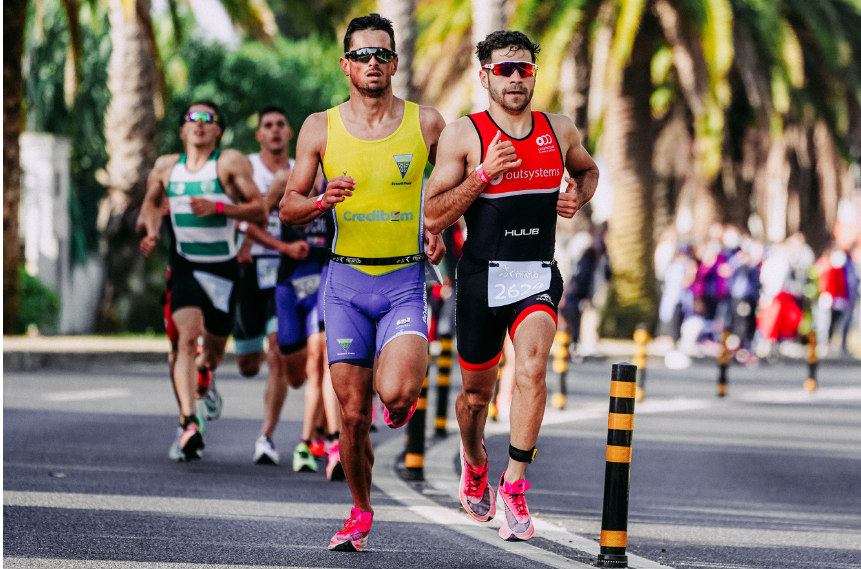
September in Melbourne: The month that catches most runners off guard
The Grand Final is on Saturday September 27. For a lot of Melbourne men, that weekend is the most physically active they’ve been since mid-winter. People kick a football around at parties, join a park run they’ve been meaning to try since March, go for longer walks.
That activity spike, combined with the psychological lift of spring, is a reliable predictor of who will be in a clinic a fortnight later.
School holidays begin next week, which changes commute patterns and routines for CBD workers. More time to get outside at lunch, more space in the morning before the commute. That’s good. Just be aware that your body’s adaptation to load doesn’t accelerate because the calendar says spring.
September mornings in Melbourne are still cool. If you’re running before work, your muscles and tendons aren’t fully warmed up when you leave the house. Slow the first kilometre down, not just in your head but on your watch.
The Melbourne Marathon is late October, six weeks away. If you’ve registered or are considering it, now is the time to address any existing niggles. A six-week build is manageable for a half marathon if you’re reasonably fit, but only if your body is moving well. A session at the Bourke Street clinic now can be the difference between getting to the start line in good shape and spending October managing something that started as a minor complaint.
What you can do before your first spring run
Don’t wait for something to hurt. If you’re planning to run through spring and summer, these are worth doing before you start.
Get your hips moving. Hip flexors and glutes take a beating from months of desk work. Spend two minutes each side on a half-kneeling hip flexor stretch. Not a token effort. Two minutes, with focus. Do it daily for a week before your first run.
Warm up properly. Running straight out the door is something you got away with at twenty. Ten minutes of walking with dynamic movements, leg swings, hip circles and calf raises off a step changes how the first kilometre feels and reduces your injury risk significantly.
Increase volume slowly. The standard guidance is no more than ten per cent more weekly running volume. If you haven’t run for four months, your starting base is essentially zero. Begin with three to four kilometres every second day and build from there. The first couple of weeks will feel too easy. That’s correct.
Strengthen the posterior chain. Calf raises, single-leg deadlifts, hip bridges. Not complicated, but they build the tendons and muscles that absorb running impact. Ten to fifteen minutes, three times a week. Consistency matters more than intensity here.
Follow the two-day rule. If something aches after a run, give it two days and see whether it settles. If it doesn’t, get it assessed. A running injury caught in the first fortnight is far easier to treat than the same injury pushed through for three months.
FREQUENTLY ASKED QUESTIONS
Q: Can I see an osteopath in Melbourne CBD without a referral? No referral is needed to book at MOSIC’s Bourke Street clinic. Osteopaths are primary healthcare practitioners, so they’re your first point of contact for assessment and treatment. This makes getting an appointment straightforward, particularly if you’re time-poor and can’t fit in a GP visit first. If your issue requires specialist input, your osteopath will refer you through the appropriate channels.
Q: What’s the difference between an osteopath and a physio for running injuries? Both assess and treat running injuries, but the emphasis differs. Physiotherapy tends to focus on isolated structures and rehabilitation exercises for specific tissues. Osteopathy takes a whole-body approach, examining how the full kinetic chain contributes to the injury. For a runner with knee pain, that means assessing hip mobility, spinal mechanics and foot posture, not just the knee itself. At MOSIC, treatment is rooted in finding the mechanical cause of the injury rather than managing the symptom, which for spring running presentations often makes the difference between a quick recovery and a recurring problem.
Q: How many sessions will I need for a spring running injury? For most soft tissue running injuries caught early, three to five sessions is a reasonable expectation, combined with a home exercise programme and a modified training plan. More complex presentations, such as chronic Achilles tendinopathy or biomechanical issues built up over years of desk work, may take longer. The clearest predictor of recovery time is how long you waited before getting assessed. An Achilles that’s been irritated for two weeks responds very differently to one that’s been pushed through for six months.
Q: Can tight hips from desk work cause running injuries, or are they separate problems? They’re connected. Tight hip flexors and weak glutes, both common in Melbourne CBD desk workers, change how load transfers through the leg during running. The knee and Achilles often end up absorbing load they’re not designed to handle because the hip isn’t working efficiently. Lower back pain after runs is also frequently linked to restricted hip movement rather than a spinal problem. At MOSIC, a running injury assessment always includes the hips and pelvis, even when the presenting complaint is further down the leg.
Contact our friendly Osteo team at MOSIC. We can help you prevent or recover from your injuries.
